
110. What Employers Look for in Marine Resumes
In marine hiring, resumes aren’t about flair — they’re about confidence, clarity, and trust. Boat owners, yacht managers, and operators often review resumes quickly, especially when timing matters. The resumes that stand out do one thing well:
They make it easy to say “yes.”
Here’s what employers actually look for in marine resumes — and what causes strong candidates to get overlooked.
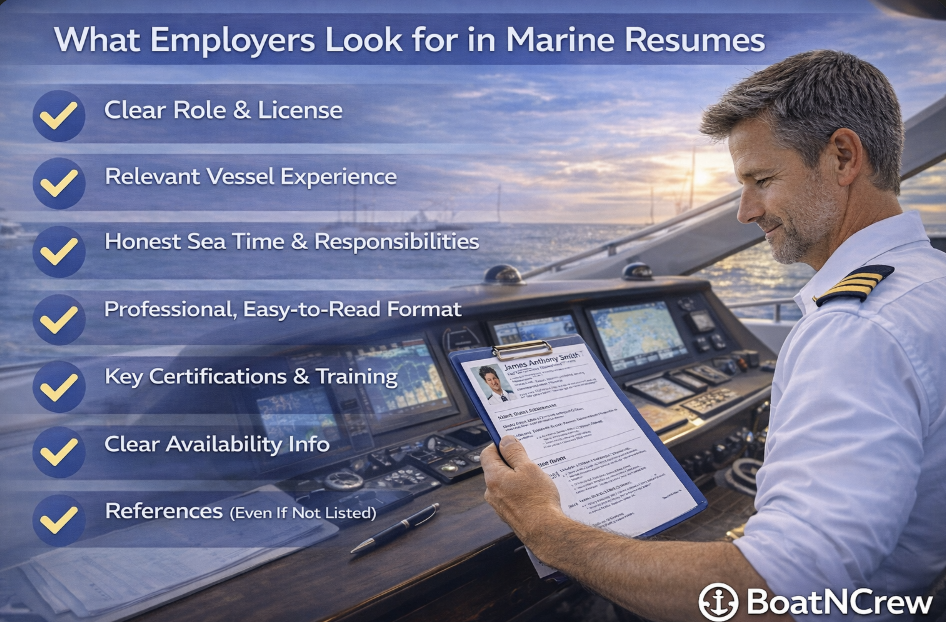
⚓ 1. Clear Role and License Information (Up Front)
The first thing employers scan is:
- Your primary role (Captain, Mate, Engineer, Deckhand, Steward/ess)
- License type and tonnage
- Key endorsements (Near Coastal, Oceans, STCW, etc.)
If this isn’t visible immediately, the resume slows the hiring process.
Tip: Put license and role at the top — not buried halfway down the page.
🌊 2. Relevant Vessel Experience (Not Everything You’ve Ever Done)
Employers don’t need your entire boating history — they need relevant experience.
They’re looking for:
- Vessel sizes and types (motor yacht, sail, commercial, private)
- Similar operations to theirs
- Comparable responsibility levels
- Routes and operating conditions
A focused resume beats a long one every time.
🧭 3. Honest Sea Time and Responsibilities
Credibility matters more than ambition.
Employers value:
- Accurate sea time
- Clearly stated duties
- Real responsibility (watchstanding, docking, maintenance, guest care)
- Growth over time
Inflated titles or vague claims raise red flags immediately.
📄 4. A Professional, Easy-to-Read Format
Marine resumes should be:
- 1–2 pages
- Clean and well-spaced
- Consistent formatting
- Free of spelling and grammar errors
Complicated layouts, dense paragraphs, or flashy designs often work against you.
Clarity builds confidence.
🧑✈️ 5. Certifications and Training That Matter
Employers scan quickly for:
- STCW
- CPR / First Aid
- Radar, ECDIS, or other relevant training
- Specialized skills (DP, towing, engineering, diving, fishing)
Only include certifications that are current and relevant to the role.
🔍 6. Proof of Professionalism
Small details signal big things.
Employers notice:
- Whether dates make sense
- Whether progression feels realistic
- Whether responsibilities match vessel size
- Whether the resume feels honest and grounded
A resume that reads professionally suggests someone who operates professionally onboard.
🔒 7. Availability and Work Type
One of the most overlooked elements — and one of the most important.
Employers want to know:
- Are you available now?
- Full-time, seasonal, delivery, or day work?
- Willingness to travel or relocate
- Expected start timeline
Clear availability speeds up hiring decisions dramatically.
⚓ 8. References (Even If They’re “Available Upon Request”)
Employers expect references — even if they don’t ask for them immediately.
It’s enough to include:
References available upon request
Just be sure they actually are.
🌍 Why Online Profiles Matter Alongside Resumes
Many employers now review resumes through online profiles, not email attachments.
Platforms like BoatNCrew allow employers to:
- See resumes instantly
- Compare experience side by side
- Contact candidates directly
- Move faster when timing matters
A strong resume paired with a visible, professional profile significantly improves hiring speed.
⚓ What Employers Don’t Care About as Much as You Think
Surprisingly, most employers care less about:
- Fancy formatting
- Buzzwords
- Overly long personal statements
- Trying to impress with volume instead of relevance
They care about whether you can do the job safely, professionally, and reliably.
🌊 The Bottom Line
Employers don’t look for perfect resumes — they look for clear, credible ones.
The resumes that get results:
- Are easy to scan
- Tell the truth
- Match the job
- Reflect real experience
- Respect the employer’s time
When your resume makes hiring feel simple, you get hired faster.