
195. Don't Overload Your Hydraulic Swim Platform: Understanding Weight Limits
Your Hydraulic Swim Platform Has Limits—Respect ThemHydraulic swim platforms have become one of the most popular features on modern motor yachts. They make it easy to launch and retrieve dinghies, personal watercraft, and other water toys while providing a convenient area for swimming and relaxing.
However, one important safety consideration is often overlooked:
The platform's maximum weight rating applies at all times—not just while carrying the dinghy or jet ski.
Exceeding that limit can damage the hydraulic system, bend the platform, or even cause catastrophic failure.
Know Your Platform's Maximum Capacity
Every hydraulic platform is designed to carry a maximum load specified by the manufacturer.
For example:
Maximum platform capacity: 900 pounds (408 kg)
This rating includes everything resting on the platform, not just the watercraft.
Many owners mistakenly believe the limit applies only while lifting or lowering the dinghy. It does not.
A Common Scenario
Let's look at a typical example.
Your platform is rated for:
900 pounds
Your tender weighs:
800 pounds
Everything appears to be within the manufacturer's limit.
Now your family wants to go ashore.
Four adults board the dinghy while it is still sitting on the swim platform.
Assuming an average weight of 150 pounds per person, that's an additional:
600 pounds
Your platform is now supporting:
- Tender: 800 pounds
- Four adults: 600 pounds
Total load: 1,400 pounds
That's 500 pounds over the platform's rated capacity.
The Correct Procedure
Instead of boarding while the dinghy is still resting on the platform:
- Lower the hydraulic platform until the tender begins to float.
- Allow the tender to become buoyant and supported by the water.
- Once the platform is no longer carrying the full weight of the tender, passengers can safely board.
- Raise the platform after the tender has departed.
The same procedure applies when returning to the yacht.
Allow passengers to disembark after the tender is floating—not while the platform is carrying the combined weight.
The Same Rule Applies to Jet Skis
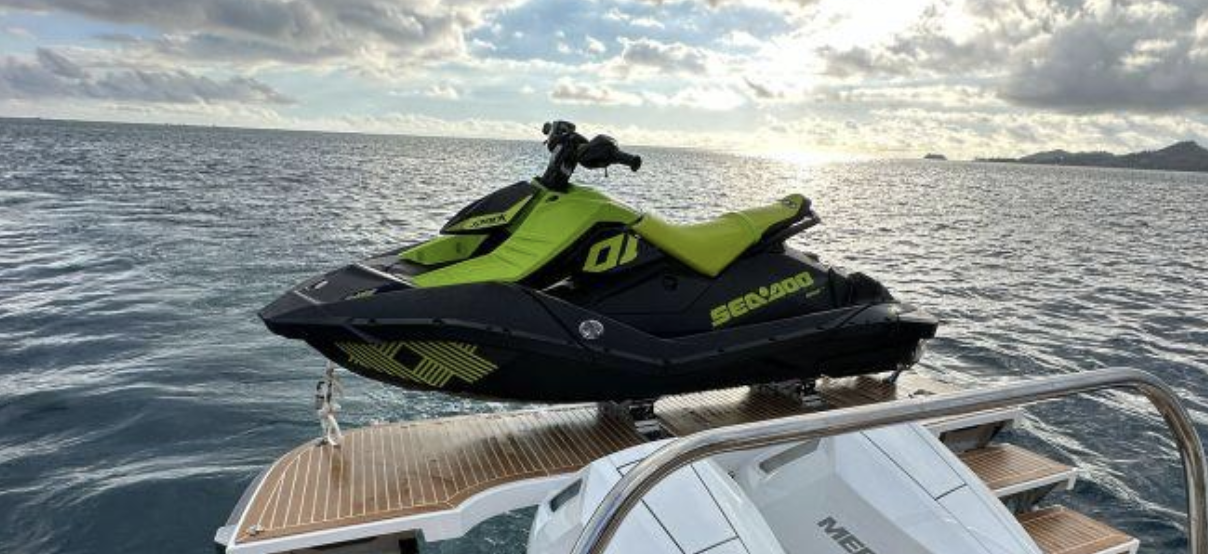
Personal watercraft can also be surprisingly heavy.
Many modern three-person jet skis weigh between 800 and 1,100 pounds before adding:
- Fuel
- Coolers
- Gear
- Passengers
If two or three people climb onto the jet ski while it is still sitting on the hydraulic platform, the total load may easily exceed the manufacturer's rating.
Why This Matters
Hydraulic platforms are engineered with specific design limits.
Overloading them may result in:
- Bent platform arms
- Hydraulic cylinder damage
- Structural cracking
- Hydraulic leaks
- Premature wear
- Expensive repairs
- Potential injuries
These systems are remarkably strong—but they are not designed to carry unlimited weight.
Read Your Owner's Manual
Not all hydraulic platforms are rated the same.
Maximum capacities vary depending on:
- Manufacturer
- Platform size
- Hydraulic system
- Yacht model
Always refer to your yacht's owner's manual or the platform manufacturer's specifications before loading heavy equipment.
Think Beyond the Tender
Remember that everything contributes to the total load, including:
- Passengers
- Fuel in the tender or jet ski
- Coolers
- Dive equipment
- Fishing gear
- Batteries
- Water toys
Small items add up quickly.
A Good Habit for Every Captain
Professional captains develop routines that reduce risk.
One of those habits is ensuring that passengers do not board or disembark a tender or personal watercraft until it is fully supported by the water rather than by the hydraulic platform.
It takes only a few extra seconds and can prevent thousands of dollars in repairs.
BoatnCrew Can Help
Whether you're learning to operate a larger yacht or hiring a professional captain to navigate and manage your vessel, BoatnCrew connects owners with experienced maritime professionals who understand the systems and procedures that keep both people and equipment safe.
Visit:
Professional credential verification is available through:
Related Articles
- https://boatncrew.com/blog/should-i-hire-a-captain-for-my-yacht
- https://boatncrew.com/blog/how-to-choose-the-right-yacht-captain
- https://boatncrew.com/blog/pre-departure-boat-checklist
- https://boatncrew.com/safety-blog
External References
National Marine Manufacturers Association (NMMA)
ABYC – American Boat & Yacht Council